| |
| |
|
From Gating to Computational Flow Cytometry: Exploiting Artificial Intelligence for MRD Diagnostics
|
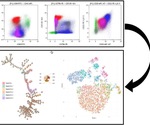
The era of AI-based methods to improve flow cytometry diagnostics in haematology is now at the beginning. The study by Nguyen and colleagues explored an emerging machine learning approach to assess phenotypic MRD in chronic lymphocytic leukaemia patients, showing that such AI-driven computational analysis may represent a robust and feasible tool for advanced diagnostics of haematological malignancies. Commentary on: Nguyen et al. Computational flow cytometry provides accurate assessment of measurable residual disease in chronic lymphocytic leukaemia. Br J Haematol 2023 (Online ahead of print). doi: 10.1111/bjh.18802.
|
|
| |
|
Sorting Cells With Real-Time Imaging: A Flow Cytometry Game Changer
|

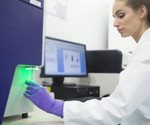
Flow cytometry is a crucial technique for many scientists because it allows them to rapidly detect, sort and analyse cells with particular characteristics. But traditional flow cytometry can be a black box, where researchers are unable to directly observe their samples. Image-based flow technology adds an extra dimension of information and can open new research methods. Gert Van Isterdael has been intensively testing the new BD CellView™ Image Technology with scientists at the Flanders Institute for Biotechnology (VIB).
|
|
| |
|
|
| |
| |
| |
|
Advanced Analysis of Marine Plankton Using Flow Cytometry
|

Flow cytometry has routinely been used to study phytoplankton by taking advantage of innate fluorescence molecules that distinguish different species and their physiological conditions. Recent advances in cytometer design and functionality have modernized certain aspects of marine biology applications creating a more accurate, data-rich, and timely assessment of microscopic marine organisms. We will examine the distribution and abundance of the phytoplankton, bacterial, and viral fractions of seawater determined using the two elements of the ACEA Biosciences Novocyte™ benchtop flow cytometer; volumetric sample delivery via precise syringe injection and extended fluorescence profiling with three laser excitation.
|
|
| |
|
|
|
Utility of Flow Cytometry Screening Before MRD Testing in Multiple Myeloma
|
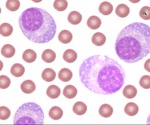
Multiple myeloma (MM) is the second most common hematological malignancy in the United States predicted to cause 34,470 new cases and 12,640 deaths in 2022 [1]. Outcomes of patients with MM continue to improve with the advent of highly effective multidrug therapy regimens and high-dose chemotherapy with autologous stem cell transplant [2]. With improvements in flow cytometry (FCM) and next-generation sequencing (NGS) technologies, attaining measurable residual disease (MRD) negativity in the bone marrow (BM) after treatment, a deeper level of response than stringent complete response (sCR), has emerged as an important prognostic factor for patients [3].
|
|
| |
|
A Flow Cytometry‐Based Ultrahigh‐Throughput Screening Method for Directed Evolution of Oxidases - Feng - Angewandte Chemie International Edition
|
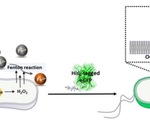
Oxidases are of interest to chemical and pharmaceutical industries because they catalyze highly selective oxidations. However, oxidases found in nature often need to be re-engineered for synthetic applications. Herein, we developed a versatile and robust flow cytometry-based screening platform “FlOxi” for directed oxidase evolution. FlOxi utilizes hydrogen peroxide produced by oxidases expressed in E. coli to oxidize Fe2+ to Fe3+ (Fenton reaction). Fe3+ mediates the immobilization of a His6-tagged eGFP (eGFPHis) on the E. coli cell surface, ensuring the identification of beneficial oxidase variants by flow cytometry.
|
|
| |
|
|
| |
| |
| |
|
The Transformative Power of Advanced Flow Cytometry in Cell and Gene Therapy
|

Cell and gene therapy is one of the most promising areas of biomedical research with numerous breakthrough treatments targeting cancer and genetic disorders. Despite rapid growth, companies face high costs and technical difficulties when it comes to phenotyping and profiling cell products. In this post, we will focus on the role of flow cytometry in chimeric antigen receptor (CAR) T cell development and how advanced systems can transform workflows and help bring novel therapies to bedside.
|
|
| |
|
|
|
How Advanced Flow Cytometry Could Transform Cell and Gene Therapy
|
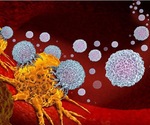
Cell and gene therapy is an extremely promising area of biomedical research, with many breakthroughs in treatments that target genetic disorders and cancer. Although this area has seen rapid growth, companies encounter technical challenges and high costs regarding the phenotyping and profiling of cell products. This article focuses on the role of flow cytometry in developing chimeric antigen receptor (CAR) T cells and how advanced systems may enhance workflows and facilitate bringing new therapies to the bedside.
|
|
| |
|
|
| |
| |
| |
|
|
|
Association Revenue Partners
A JSJD Media Company
500 N. Central Expy, Suite 231, Plano, TX 75074
|
|
|
| |
|
|